
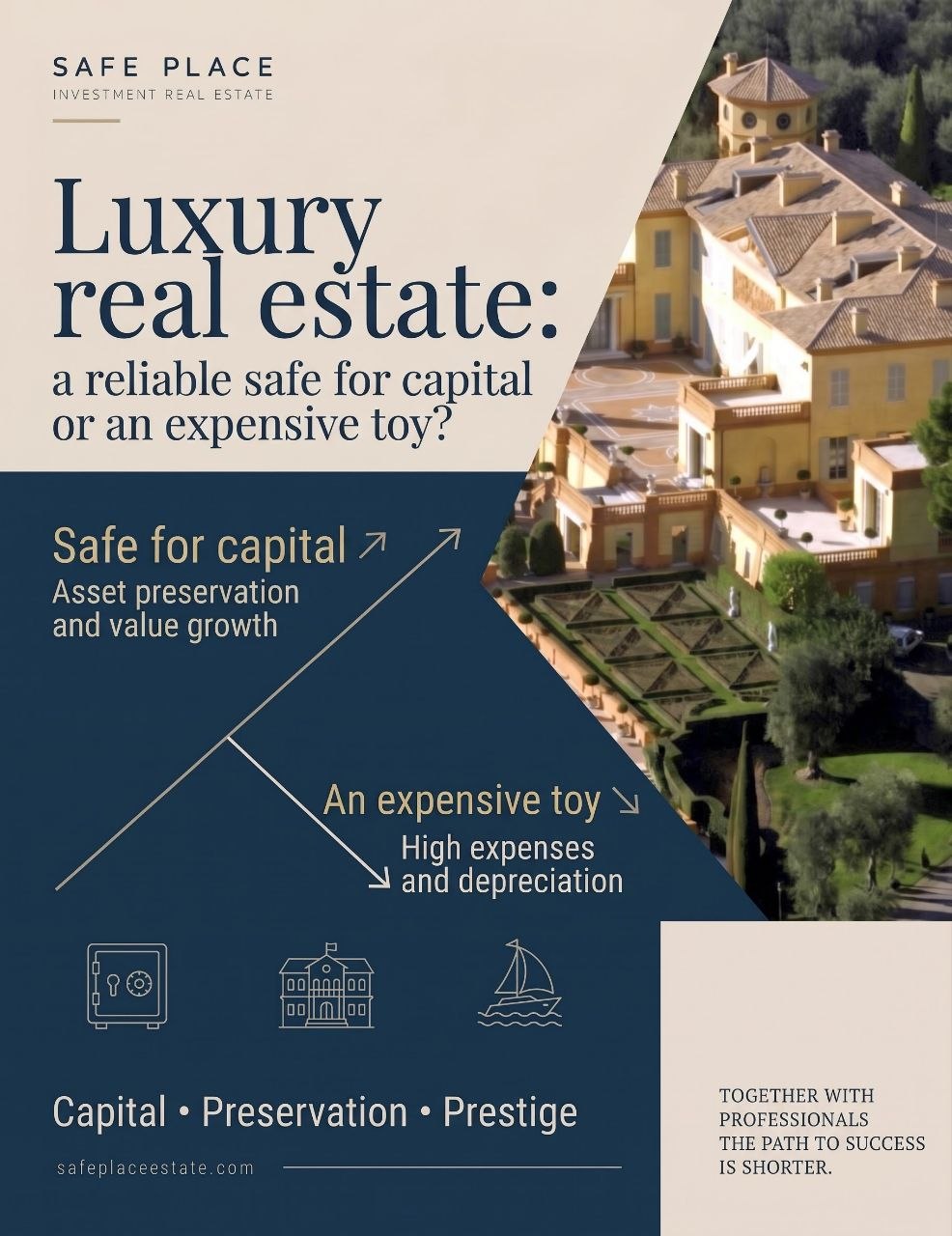
Preserving capital or buying for personal enjoyment
The central risk is confusing an emotional purchase with an investment calculation. A view, a prestigious address and rare architecture may have personal value without guaranteeing either appreciation or a quick exit.
Trophy assets include distinctive penthouses, waterfront villas and residences with private amenities. An investor needs to understand whether market evidence supports their scarcity value and who the eventual buyer might be.
Potential advantages
Physical scarcity. A historic centre or a particular waterfront plot cannot simply be replicated. Limited supply may support interest in a quality asset, but cannot guarantee sustained appreciation.
A long ownership horizon. The asset may serve a long-term portfolio or succession objective. Tax, ownership structure, currency exposure and future transfers should be considered at the outset.
A particular tenant profile. Some properties may attract executives, expatriates or corporate tenants. A tenant’s income does not remove the need for affordability checks, a suitable contract, a deposit and insurance.
Liquidity and the cost of waiting
A high-value, specialised property can take considerable time to sell. A forced sale may realise less than expected. Any discount depends on the market, the asset and the time available.
Capital committed to such a purchase should not be treated like immediately available cash. Model a prolonged selling period separately from the optimistic exit price.
Rental income and ownership costs
A large monthly rent is not the same as a high percentage yield. Acquisition costs, tax, maintenance, security, management, insurance and vacancy all contribute to the cost of ownership.
Compare net cash flow with the entire capital commitment. A headline yield without its source, expense assumptions and occupancy model is not a reliable basis for comparing either luxury assets or smaller apartments.
The premium segment still faces market risk
Luxury buyers may finance purchases differently and hold assets for longer. That does not make the segment automatically immune to downturns, exchange-rate movements, changing demand or local restrictions.
A robust plan considers both continued demand and a longer holding period with additional expenses. The address and prestige matter alongside condition, legal due diligence and the depth of the resale market.